
What makes specialty tractors different from standard models? You may have pondered that question many times, especially if you’re just starting to plan your own orchard or you’re looking for ways to maximize your current operation.
Specialty tractors, including orchard tractors and low-profile models, are built with reduced height profiles, narrower frames, and protective design features that let them work under tree canopies without damaging crops. For Central Valley, California, orchard farmers growing almonds, pistachios, walnuts, and grapes for winemaking, these machines are the difference between a smooth operation and costly crop damage.
If you’ve ever tried running a standard utility tractor between tight orchard rows, you already know the problem! Branches snap, fruit gets knocked loose, and you spend more time worrying about clearance than getting work done. That’s exactly why specialty tractors exist, and why they’ve become essential for orchard operations across California’s Central Valley.
Let’s take a look at the difference a specialty tractor makes for a very specialized farming operation.
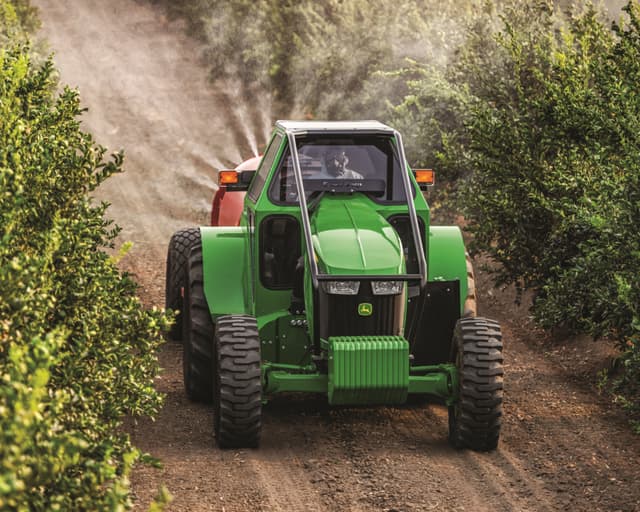
The biggest difference is the profile. Orchard tractors sit lower and use a narrower frame than standard utility tractors. A model like the 5075GL stands just 56 inches tall and 53 inches wide, compared to a standard 5M Series tractor that can reach well over 80 inches in height with a cab. That reduced profile lets you work under almond and walnut canopies without risking damage to branches or fruit.
Beyond size, specialty tractors also feature foldable ROPS (roll-over protective structures), optional limb lifters, and fender extensions that deflect branches away from the tractor body. These aren’t just cosmetic upgrades on the tractor; they protect both your crop and your equipment during every pass through the rows.

The right orchard tractor depends on your row spacing, crop type, and horsepower needs. Here’s how the most popular models stack up:
| Model | Engine HP | Height | Best For | Key Feature |
|---|---|---|---|---|
| 5075GL | 73 HP | 53.5 inches | Low-canopy orchards | Lowest profile in the lineup |
| 5ML Series | 100–130 HP | Low-profile | Large nut orchards | Factory-installed cab option |
| 5075EN | 75 HP | Narrow | Tight row spacing | 51-inch working width |
| 5GV Series | 75–90 HP | Narrow | Vineyards and narrow orchards | 39-inch minimum row width |
For most Central Valley almond and pistachio operations, the 5ML 9 Series hits the sweet spot. It delivers 100 to 130 horsepower with a low-profile stance and now comes with a factory-installed cab. No more sourcing aftermarket cab solutions on your own! Get the right fit directly from John Deere, installed by a professional at Belkorp Ag. The cab includes climate control, an air suspension seat, and a reconfigurable in-dash display, which makes a long harvest day a lot more manageable.
If your rows are especially tight, the 5075EN offers a 51-inch working width at 75 horsepower, which is the highest horsepower available that meets emissions requirements without diesel exhaust fluid or diesel particulate filters. That simplicity is a real advantage for smaller operations looking to reduce maintenance complexity.

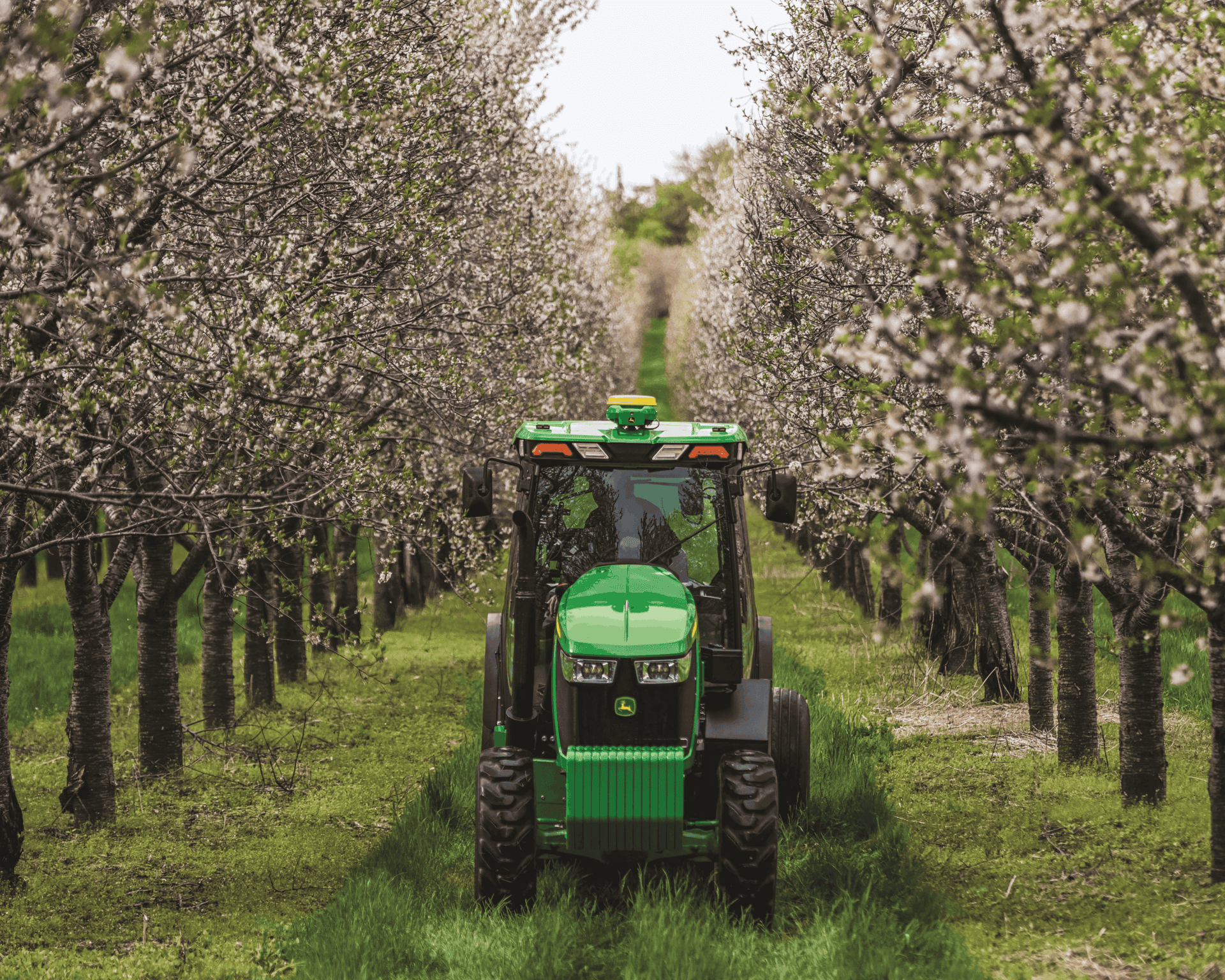
Central Valley orchards are planted with tight spacing to maximize production per acre. Almond rows typically sit 20 to 24 feet apart, and walnut canopies often leave less than 10 feet of clearance for equipment. A standard tractor with a cab simply won’t fit under those conditions without causing damage.
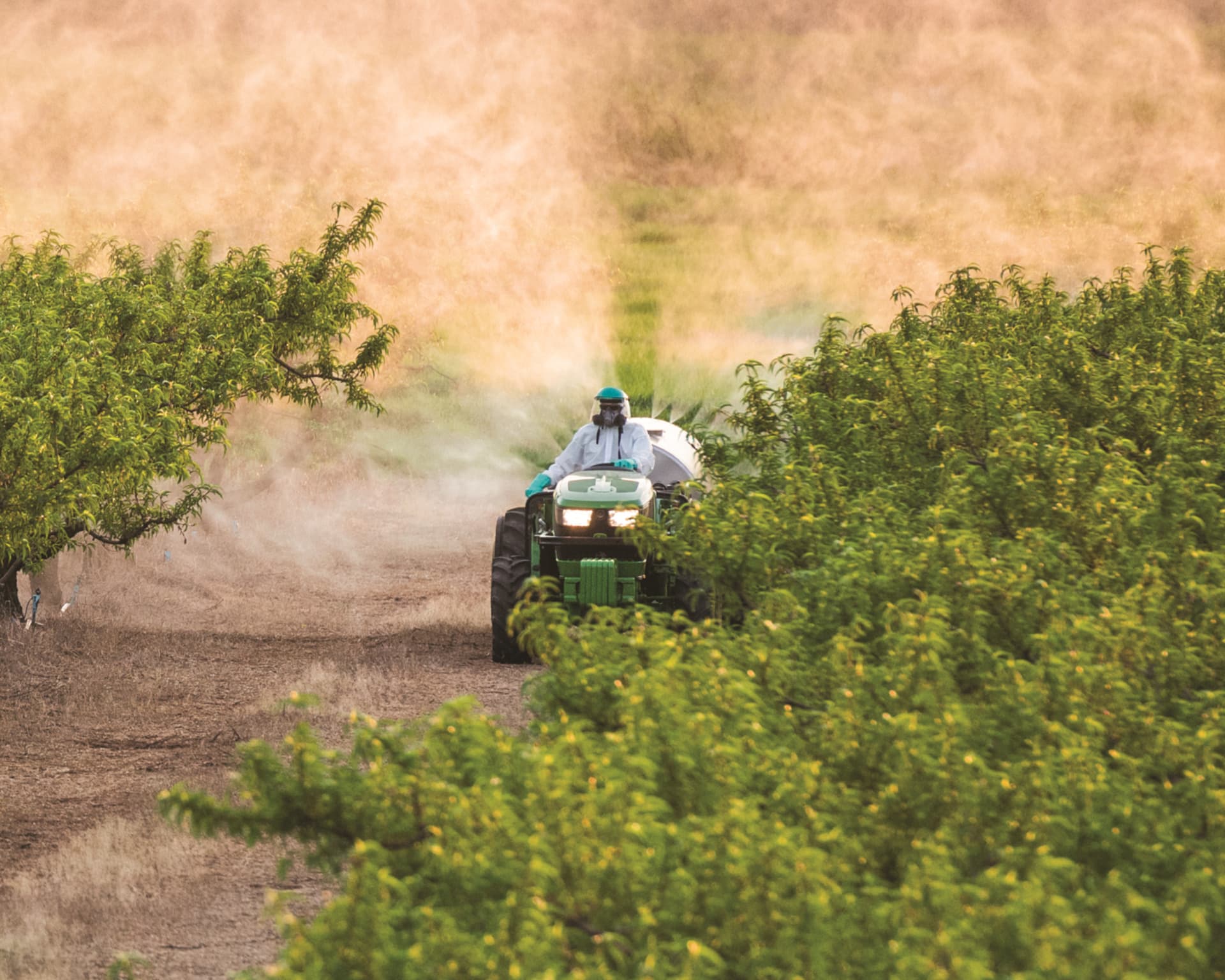
Orchard tractors keep the operator and equipment below the canopy line during spraying, mowing, and amendment spreading. These are jobs that happen multiple times per season and cover hundreds of acres, so you need a reliable piece of equipment with good clearance. One broken branch during bloom season can mean lost yield, so protecting the canopy isn’t optional. California’s dry, dusty growing conditions also make cab filtration a priority, and purpose-built orchard cabs handle that far better than standard configurations.
Not all orchard tractors are built the same. When evaluating options, pay attention to these details:
Choosing the right specialty tractor depends on your orchard layout, crop type, and the implements you plan to run. At Belkorp Ag, our team works with Central Valley growers every day and can walk you through the options that make sense for your specific operation.
We have a great selection of 5 Series specialty tractors that will make it simple and efficient for you to spray, harvest, and maintain your orchard this season. Visit us at one of our 8 Central Valley locations, from Modesto to Firebaugh and Ukiah.