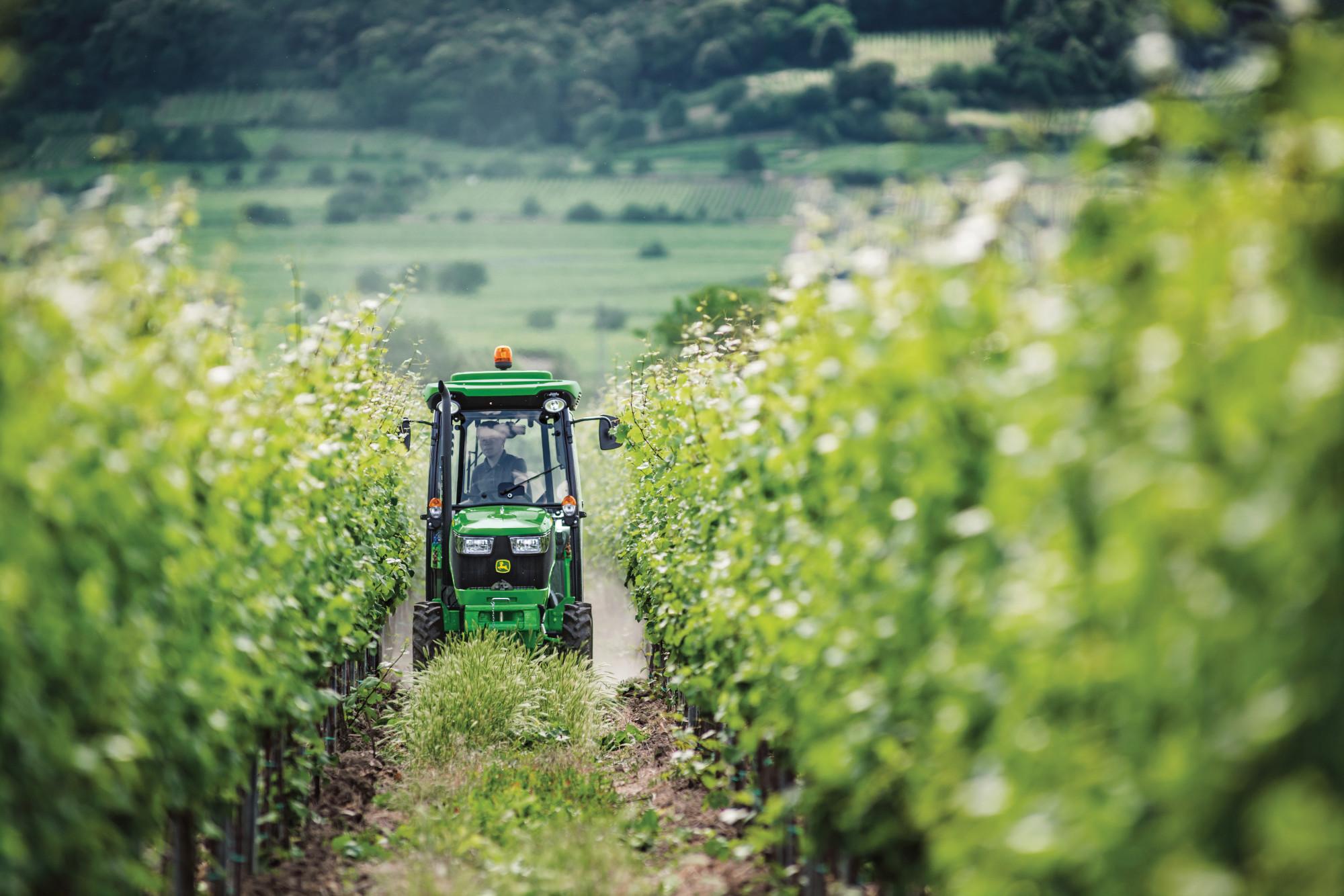
How to Choose a Narrow Tractor for California Vineyards and Orchards
11/19/2026
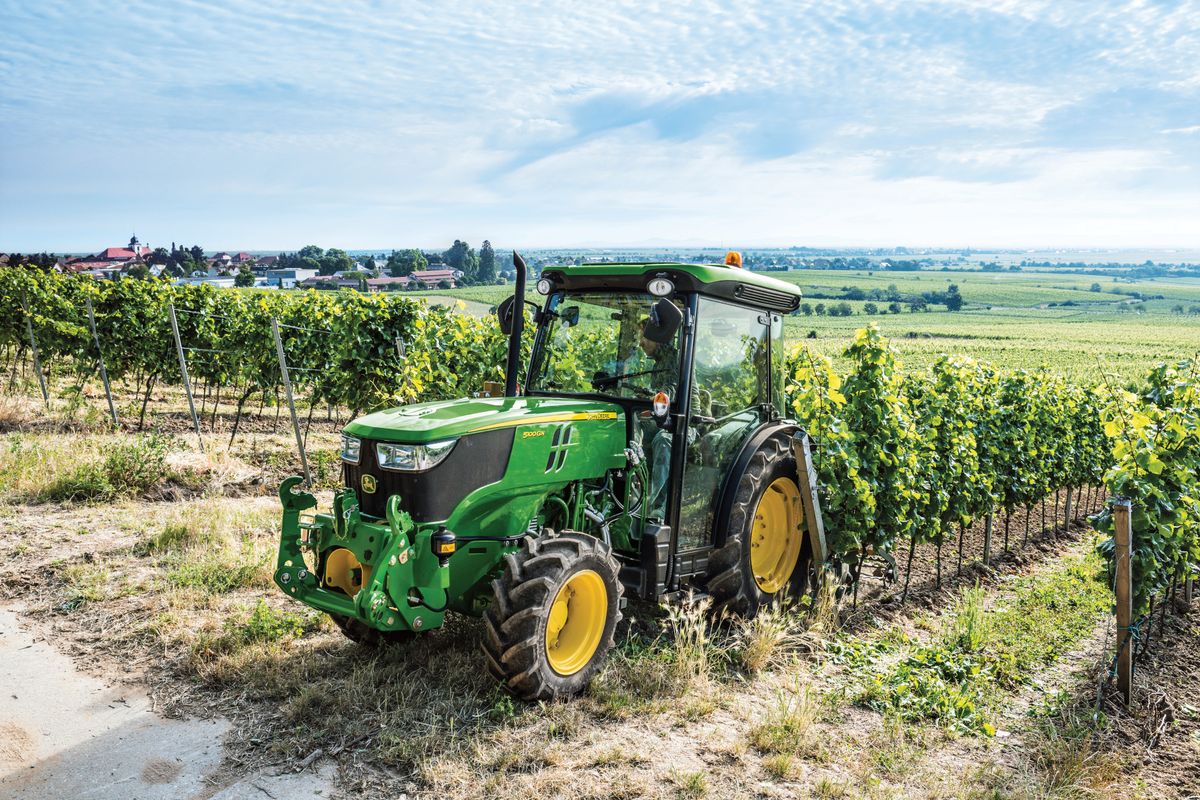
That’s the short answer, but if you’re still having trouble deciding which narrow specialty tractor will work best for you, we’ve got a complete breakdown of the John Deere tractor models we carry and their specifications. Here’s what you should consider when choosing a narrow tractor for your California vineyard or orchard.
Measure Your Rows Before You Shop
You should be checking the width of your rows in July, not January. Vines and limbs push into the row during the growing season, and that is the width you actually drive your machine through.
Take three numbers to your dealer when deciding on a narrow tractor:
Those three numbers eliminate most of the questions before anyone talks about price. Bring photos of your trellis system, too. Cross-arms and quadrilateral trellises change how much room a cab really has.
Three Tractor Types Solve Three Different Problems
John Deere's 5G Specialty Series splits into three builds. Picking the right one can make a big difference when conquering your rows.
5GV, the ultra-narrow build. Made for vineyard rows. The 5GV cab measures 42.6 inches wide, and the 5075GV lists a working width of 43 inches.
5GN, the narrow build. A little wider, with a roomier cab at 50.2 inches. The 5075GN lists a working width of 49.5 inches. This is the build for orchards and wider-planted vineyards where the extra cab space is worth the inches.
5GL, the low-profile build. Made for orchards with heavy, low fruit. Deere describes the 5075GL as clearing the canopy at less than 56 inches tall and 53 inches wide, with height and width varying by tire configuration.
Six inches sounds trivial on paper, but in a mature block it decides whether you scrape low-hanging branches every pass.
You should also leave yourself a little room on either side for your sprayer, mower, or weed knife, which may sit wider than the tractor.
Height Matters More in Orchards Than Vineyards
Vineyard work is mostly a width problem. Orchard work is a height problem.
Almond, walnut, and citrus canopies drop low on the outside rows. A standard cab catches limbs, tears bark, and knocks fruit. The John Deere 5GL build solves this by lowering the whole machine.
Open stations go lower still, but they also leave you exposed to spray and dust, which matters if chemical application is a big part of the job.
Matching Horsepower to the Implement
Pick your heaviest implement first, then size the engine to it.
Air-blast sprayers are usually the deciding factor. They pull hard and run continuously at rated PTO speed. Mowers, flail shredders, and tillage tools come next.
Here are the specs across the narrow models Belkorp Ag stocks:
Smaller blocks with light mowing and a modest sprayer can all be comfortably handled by a 75-horsepower tractor. Large acreage, a tower sprayer, or heavy tillage pushes you toward the 5100GN at 100 engine horsepower and 86 PTO horsepower.
Resist buying two steps more than you need. Extra horsepower usually comes with extra width and weight.
Hydraulics and PTO Decide What You Can Run
Specialty implements rely on hydraulics. Hydraulic pruning towers, sprayer controls, and hydraulic tool bars all draw flow at the same time.
The 5075GL carries a standard pump output of 25.5 gpm, with an optional system up to 33.4 gpm. If you run a three-function tower, ask your dealer for the flow math on your exact build before you buy.
Count your selective control valves the same way. Add one more than you think you need. Growers rarely regret the spare circuit.
Hitch category is the other quiet spec. The 5075GL uses a Category 1 and Category 2 hitch, so older implements still mount up. Confirm the hitch on any model you are comparing, because it limits which implements carry over.
Cab or Open Station
This comes down to spraying and heat.
A sealed, filtered cab protects the operator during chemical application and makes 105-degree Central Valley afternoons survivable. The tradeoff, though, is width. The 5GV cab stays slim at 42.6 inches, while the 5GN cab gains room at 50.2 inches.
Open stations are shorter, lighter, and cheaper. They work well in tall orchards where height is the constraint and spraying is handled by a dedicated machine.
If one tractor has to do everything, buy the cab. Ask your Belkorp Ag sales rep to confirm which filtration cartridge your chemical program requires.
What Belkorp Ag Carries
Belkorp Ag stocks multiple John Deere specialty tractors for orchard and vineyard work across its eight California locations.
For the tightest vine rows: the 5075GV at 75 horsepower and the 5090GV at 90 horsepower. Both run a 12F/12R or 24F/12R transmission.
For low-canopy orchards: the 5075GL, the lowest and narrowest of the group, with the biggest hydraulic capacity.
The short version: choose a 5GV when width is the constraint, a 5GN when you want cab room and more power, and the 5GL when the canopy is the thing stopping you.
New, Used, or Rented
Each path fits a different operation.
Buy new when the tractor runs daily, and you want full warranty coverage and a build specified to your rows.
Buy used when budget leads and hours matter less than fit. Check the sprayer-side wear points, the front axle, and the condition of the fenders. Narrow tractors get beat up against trellis wire.
Rent during pruning or harvest crunch when you need a second machine for six weeks. Renting also lets you test a width in your own rows before committing. Ask the Belkorp Ag team what is available in the rental fleet.
Weight and Traction on Hillside Blocks
North Coast vineyards are not flat. Sonoma and Mendocino blocks often sit on grades that punish a light, narrow machine.
Narrow tractors trade stability for width. The shorter the track, the higher the tip risk on a side slope. Weight helps, and so does a low center of gravity, which is part of why the low-profile has better stability.
Three things to ask about on sloped ground:
Roll-over protection and the seat belt will protect you from many accidents, so use both on every outing.
Ask About Guidance Before You Buy
Precision Ag guidance technology used to be a row-crop luxury. It’s now available for specialty blocks too.
Consistent pass spacing cuts sprayer overlap, and that shows up in the chemical bill within a season. Ask which guidance and display options fit the model and build you are considering, and whether they are included in the quote or priced separately.
It changes the comparison between two machines that look similar on price.
A Short Checklist Before You Sign
Run through this with your rep:
Take the machine down an actual row before you buy. Paper specs do not account for your trellis.
Talk It Through With Someone Who Knows
Specs narrow the field, but local knowledge from a Belkorp Ag team member helps you come to a final decision.
Belkorp Ag works with growers across California, from the North Coast vineyards to Central Valley orchards. Bring your row measurements and your implement list to any Belkorp Ag location, and the team can walk you through which build fits.
Frequently Asked Questions
How narrow can a John Deere specialty tractor go?
The ultra-narrow 5GV build goes narrowest. The 5075GV lists a 43-inch working width, and the 5GV cab measures 42.6 inches wide. Final width depends on tire selection, so confirm the build with your dealer.
What is the difference between the 5GV, 5GN, and 5GL?
The 5GV is the ultra-narrow vineyard build. The 5GN is slightly wider with a roomier cab and more horsepower available. The 5GL is the low-profile orchard build, made to clear a heavy canopy.
Do I need a cab for vineyard spraying?
A filtered cab is strongly recommended for chemical application. It protects the operator and extends the hours you can safely work during Central Valley heat.
What horsepower do I need for an air-blast sprayer?
It depends on the sprayer's PTO draw and your terrain. Match rated PTO horsepower to the sprayer specification, then add margin for slopes.